



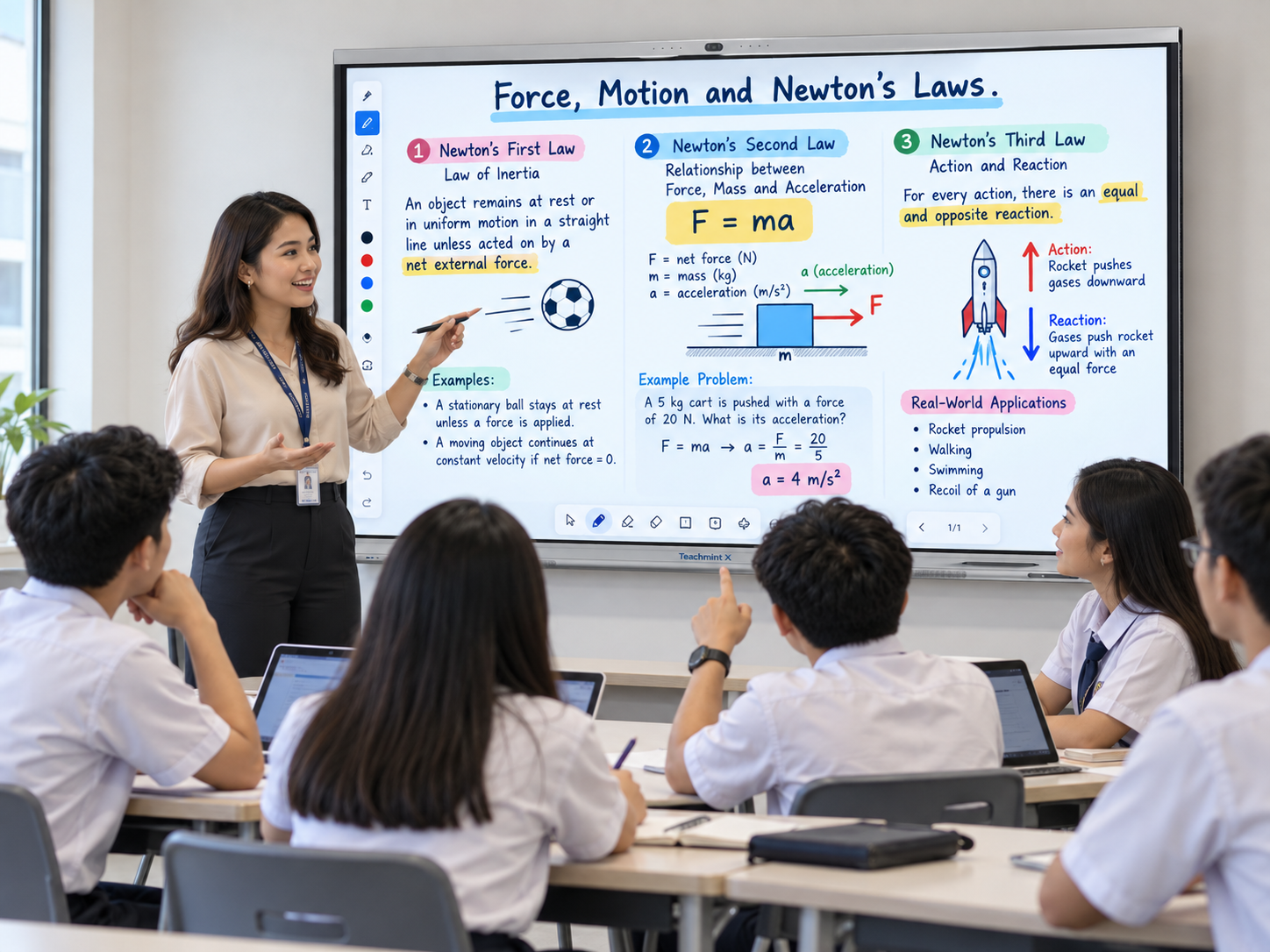
Digital boards are becoming more intelligent as artificial intelligence is integrated directly into classroom teaching.
An AI teaching digital board for classrooms in the Philippines can help educators combine traditional board-based instruction with interactive content and AI-assisted tools.
Instead of using a digital board only to show presentations or videos, teachers can use AI to work with questions, explain concepts, search educational material, improve written content, and make classroom activities more dynamic.
What Makes a Digital Board an AI Teaching Board?
A normal digital board may provide:
- Touch interaction
- Digital whiteboarding
- Multimedia
- Annotation
- Screen sharing
An AI teaching board extends this by providing artificial intelligence capabilities that help teachers during lessons.
These can include:
- Smart problem solving
- Educational search
- Voice assistance
- Smart writing
- Shape recognition
- Visual search
- Teaching resource support
The goal is to make the board a more active teaching tool.
Teachmint X as an AI Teaching Digital Board
Teachmint X combines interactive display hardware with EduAI and a smart digital whiteboard.
This gives teachers access to AI tools directly within the classroom environment.
AI for Real-Time Teaching
Real-time classroom teaching is unpredictable.
Students may ask unexpected questions, teachers may need additional examples, and lesson discussions may move in new directions.
EduAI can help teachers access AI-assisted support while staying within the teaching interface.
Smart Whiteboarding
Teachers can use Teachmint X for:
- Writing
- Drawing
- Annotation
- Diagrams
- Problem solving
- Multimedia
- Images
- PDFs
- Classroom notes
AI-assisted features can work alongside these normal whiteboard functions.
AI for Mathematics and Science
AI-powered problem solving can be particularly useful for:
- Mathematics
- Physics
- STEM classrooms
- Technical education
Teachers can work directly with problems written on the board.
Voice-Based Interaction
Voice AI can make classroom interaction more natural.
Teachers may be able to use voice functionality while continuing to engage with students rather than focusing entirely on the touchscreen.
Digital Boards for Everyday Classroom Workflows
An effective AI teaching board should support the full lesson, not just isolated AI features.
Teachers should be able to:
- Start the lesson quickly
- Open teaching content
- Write on the board
- Use multimedia
- Search information
- Work with AI
- Share screens
- Save lesson content
The experience should be simple enough for everyday use.
Connected Classroom Management
Teachmint X can also work with VisionX classroom monitoring.
This extends the value of the digital board beyond individual teachers and classrooms.
Schools can consider connected classroom capabilities when deploying technology across many rooms.
Other Digital Board Options in the Philippines
Educational institutions can also evaluate platforms such as ViewSonic ViewBoard, LG CreateBoard, Horion, Qeoyo, and Hikvision.
These brands provide interactive digital-board capabilities relevant to teaching and collaboration.
Institutions prioritizing AI should verify which teaching-focused AI tools are available on specific models.
What to Look for in an AI Teaching Digital Board
Schools should evaluate:
- AI teaching capabilities
- Ease of use
- Writing experience
- Display quality
- App compatibility
- Wireless screen sharing
- Camera and microphone
- Classroom monitoring
- Teacher training
- Warranty
- Local support
The strongest platform is not necessarily the one with the largest number of AI features.
It is the one where teachers can use AI naturally during real classroom teaching.
Conclusion
An AI teaching digital board for classrooms in the Philippines can help educators bring together handwriting, multimedia, digital resources, and artificial intelligence within one teaching environment.
For Philippine schools looking for an education-focused platform, Teachmint X combines EduAI, smart digital whiteboarding, interactive hardware, integrated AV, and connected classroom capabilities.
This can help institutions move from basic digital display toward more intelligent and connected classroom teaching.